

How to Build a Cheap WordPress Website in Ireland Without Technical or Coding Knowledge
December 16, 2025
AI Guardrails
February 4, 2026The software development landscape has undergone a seismic shift over the past two years. What began as intelligent autocomplete has evolved into systems capable of generating entire applications, refactoring legacy codebases, and debugging complex runtime issues. By the end of 2025, many development teams have already integrated AI tools into their daily workflows, but we’re still in the early stages of understanding what this transformation means.
2026 represents a critical inflection point. The experimental phase is ending. Organizations are moving from “AI might help developers” to “our development process is fundamentally AI-native.” This transition raises profound questions about the nature of software engineering itself. Are developers becoming operators who orchestrate AI systems? Designers who specify intent rather than implementation? Or something entirely new—hybrid professionals who bridge human creativity with machine capability?
The answer matters because it will shape career trajectories, organizational structures, and the software that powers our world for the next decade.
Evolution of AI-Driven Development
From Autocomplete to Autonomous Agents
The journey from GitHub Copilot’s 2021 debut to today’s autonomous coding agents represents more than incremental improvement. Early AI coding assistants functioned as sophisticated pattern matchers—analyzing your code and suggesting the next line based on statistical likelihood. They were useful but fundamentally reactive, waiting for human direction at every step.
By 2024, the paradigm shifted. Large language models with extended context windows and reasoning capabilities began demonstrating genuine problem-solving ability. Instead of merely completing code, these systems could understand requirements, plan implementations, and execute multi-step tasks with minimal human intervention. The difference between a 2023 autocomplete tool and a 2025 coding agent is the difference between a spell checker and a co-author.
The Reasoning Revolution
What fundamentally changed? The transition from rule-based automation to reasoning-based AI.
Traditional automation requires explicit instructions: “When the user commits code, run these tests, then deploy if they pass.” This works brilliantly for well-defined processes but breaks down when facing novel situations. Reasoning-based AI, by contrast, can interpret ambiguous requirements, make judgment calls, and adapt strategies based on context.
Consider a common scenario: migrating a REST API to GraphQL. A rule-based tool might help with syntax conversion, but it can’t understand the architectural implications—how to restructure resolvers, handle authentication differently, or optimize for N+1 query problems. A reasoning AI can analyze your existing architecture, understand the trade-offs, and propose solutions that account for your specific constraints and patterns.
This shift from “follow these steps” to “achieve this goal” represents the core innovation enabling new coding paradigms.
New Coding Paradigms Enabled by AI
Prompt-Driven Development
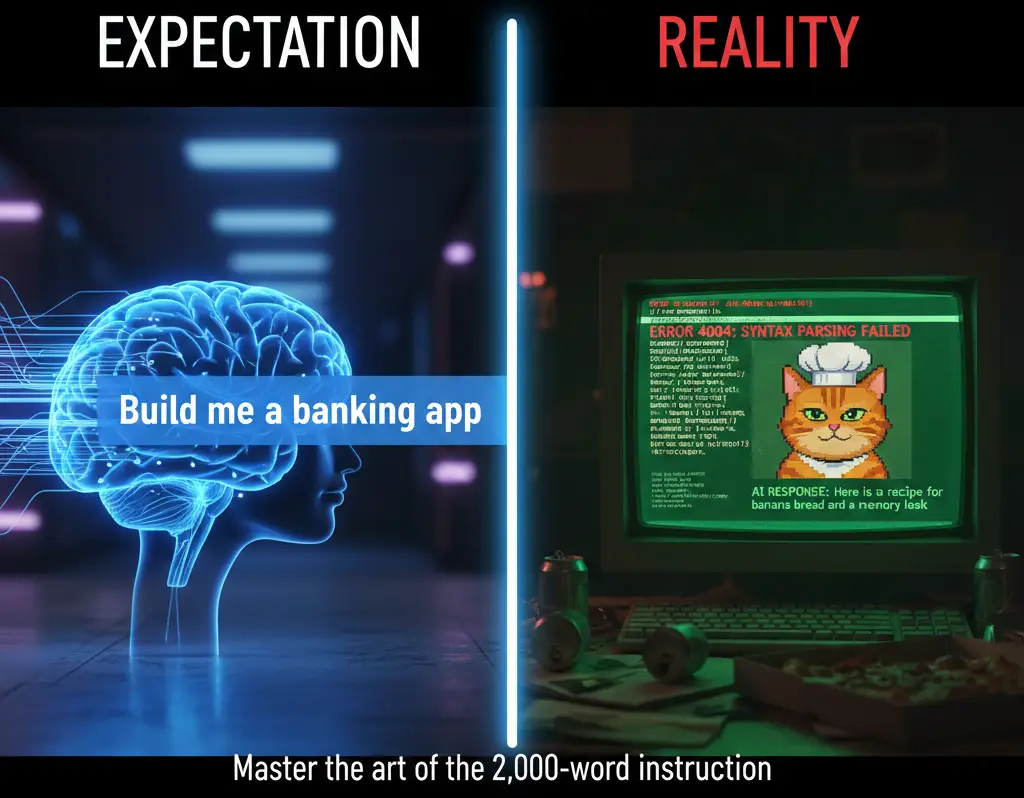
In prompt-driven development, natural language instructions become the primary interface for code generation. Rather than opening an IDE and writing functions, developers describe what they want: “Create an authentication middleware that checks JWT tokens, handles refresh logic, and logs failed attempts with rate limiting.”
This paradigm excels at generating boilerplate, implementing well-established patterns, and creating initial implementations quickly. It fails when requirements are genuinely novel, when subtle performance characteristics matter, or when the prompt lacks sufficient context about the existing system.
The key skill isn’t writing prompts—it’s knowing what to ask for and how to evaluate what you receive.
Vibe Coding and Intent-Based Programming
“Vibe coding” has emerged as shorthand for a more exploratory approach: describing the feeling or behavior you want rather than technical specifications. “Make this form feel more responsive” or “Add subtle animations that feel professional, not playful” translate subjective intent into concrete implementations.
This works because modern AI systems have been trained on millions of design patterns and user interface implementations. They’ve internalized what “professional” or “responsive” typically means in specific contexts. The paradigm works best for user-facing features where human judgment about aesthetics and feel is crucial but hard to specify formally.
Specification-First Coding
Specification-first development inverts the traditional process. Instead of writing code and then documenting it, you write comprehensive specifications—requirements, constraints, edge cases, performance characteristics—and let AI generate implementations that satisfy them.
This paradigm shines for complex business logic where correctness is paramount. Financial calculations, regulatory compliance systems, and complex state machines benefit from this approach. The specification becomes the source of truth; the code is a derived artifact that can be regenerated or modified as requirements evolve.
The challenge? Writing complete, unambiguous specifications is often harder than writing code directly. This paradigm demands rigorous thinking upfront.
Natural Language to Code Pipelines
These systems transform conversational descriptions into working software through multi-stage refinement. You describe a feature, the system asks clarifying questions, generates an implementation plan, writes code, tests it, and iterates based on results.
The pipeline approach works because it mirrors how human developers actually work—clarifying requirements, planning, implementing, testing, refining. By 2026, these pipelines will incorporate memory of previous interactions, learning your codebase’s patterns and your team’s preferences.
Multi-Agent Coding Systems
Perhaps the most transformative paradigm: multiple specialized AI agents collaborating on development tasks. One agent focuses on architecture, another on implementation, a third on testing, and a fourth on security review. They communicate, debate trade-offs, and reach consensus—supervised by human developers who provide direction and make final decisions.
This paradigm excels at complex, multi-faceted problems where no single perspective captures all constraints. Building a scalable microservices architecture requires thinking about API design, data consistency, deployment automation, monitoring, security, and cost optimization simultaneously. Multi-agent systems can hold these concerns in parallel better than individual developers or single-agent systems.
The failure mode? Agents can get stuck in loops, pursuing local optima while missing the bigger picture. Human oversight remains essential.
Declarative Over Imperative Programming
AI has accelerated an existing trend toward declarative programming. Instead of specifying step-by-step procedures, you declare desired outcomes and let the system determine how to achieve them. Infrastructure-as-code, database migrations, and UI frameworks have long embraced this approach; AI extends it to application logic.
Declarative code is easier for AI to reason about and modify because it expresses intent rather than mechanism. When requirements change, AI can more easily adapt declarative specifications than untangle imperative implementations.
Human-in-the-Loop Development Models
The most successful paradigm by 2026 will be collaborative: AI generates implementations, humans review and refine, AI incorporates feedback and learns preferences. This isn’t AI replacing developers or developers limiting AI—it’s a true partnership where each contributes what they do best.
Humans provide domain knowledge, creative insight, ethical judgment, and understanding of broader context. AI provides tireless attention to detail, instant access to vast technical knowledge, and the ability to explore many implementation options quickly.
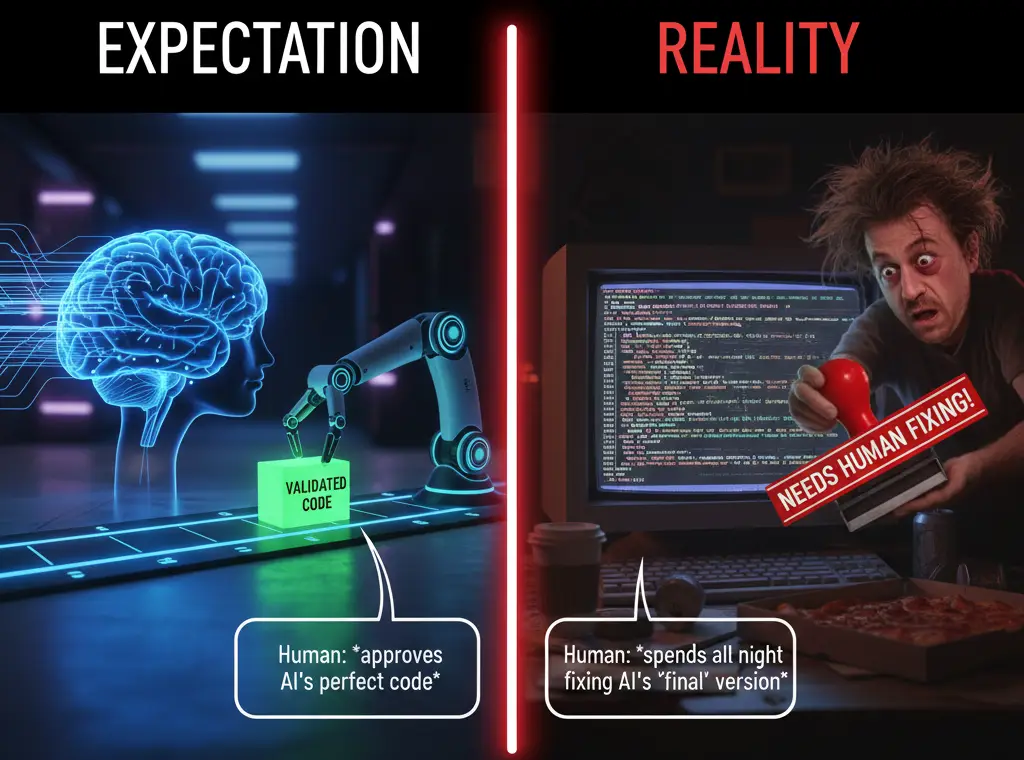
The question for 2026: How do we design workflows that make this collaboration feel natural rather than cumbersome?
AI-Native Developer Workflows
Traditional development workflows were designed around human limitations—we can only hold so much in working memory, we need time to understand unfamiliar code, we make mistakes when tired or distracted. AI-native workflows assume different constraints.
IDEs as Orchestration Layers
By 2026, integrated development environments will fundamentally transform from text editors with plugins into orchestration platforms that coordinate multiple AI agents. Your IDE will monitor your work, anticipate needs, and proactively suggest improvements.
Writing a new API endpoint? The IDE might automatically generate corresponding tests, update API documentation, add monitoring hooks, and check for security vulnerabilities—all in the background, presenting results for review when you’re ready.
This shift means IDEs become less about providing tools and more about managing an ecosystem of AI capabilities, each specialized for different aspects of development.
Autonomous Refactoring and Codebase Navigation
Understanding large codebases has always been a significant challenge, especially for new team members. AI-native workflows make this dramatically easier. You can ask, “Show me all the code paths that write to the user database” or “Find architectural inconsistencies in how we handle errors” and receive comprehensive, contextualized answers.
More powerfully, AI can execute complex refactoring operations autonomously. Renaming a variable traditionally requires careful find-and-replace to avoid breaking unrelated code with similar names. AI can understand context, handle edge cases, and even update documentation and comments to reflect changes.
By 2026, developers will regularly delegate week-long refactoring projects to AI agents, reviewing changes incrementally rather than doing the tedious work manually.
AI-Generated Tests, Documentation, and Migrations
The least enjoyable aspects of development—writing comprehensive tests, maintaining documentation, executing database migrations—become largely automated. AI excels at these tasks because they’re systematic, well-defined, and benefit from thoroughness that human developers find tedious.
The workflow: implement a feature, and AI immediately generates unit tests, integration tests, edge case tests, and updates documentation to reflect new behavior. You review and refine rather than creating from scratch.
Database migrations illustrate the power particularly well. Describe the schema change you need, and AI generates migration scripts, identifies potential data loss risks, suggests backward-compatible transition strategies, and even writes rollback procedures. Deployment tasks that once required careful planning become routine.
Continuous AI Code Review and Security Scanning
Rather than code review happening at pull request time, AI provides continuous feedback as you write. It catches bugs, identifies security vulnerabilities, suggests performance optimizations, and ensures consistency with team conventions—all in real-time.
This shifts human code review from catching mechanical problems to focusing on architectural decisions, business logic correctness, and knowledge sharing. Reviews become more valuable because they concentrate on aspects that require human judgment.
The question: Will developers become overly reliant on AI safety nets, losing the skills to spot issues independently?
Frameworks, Languages, and the “AI Bias” Problem
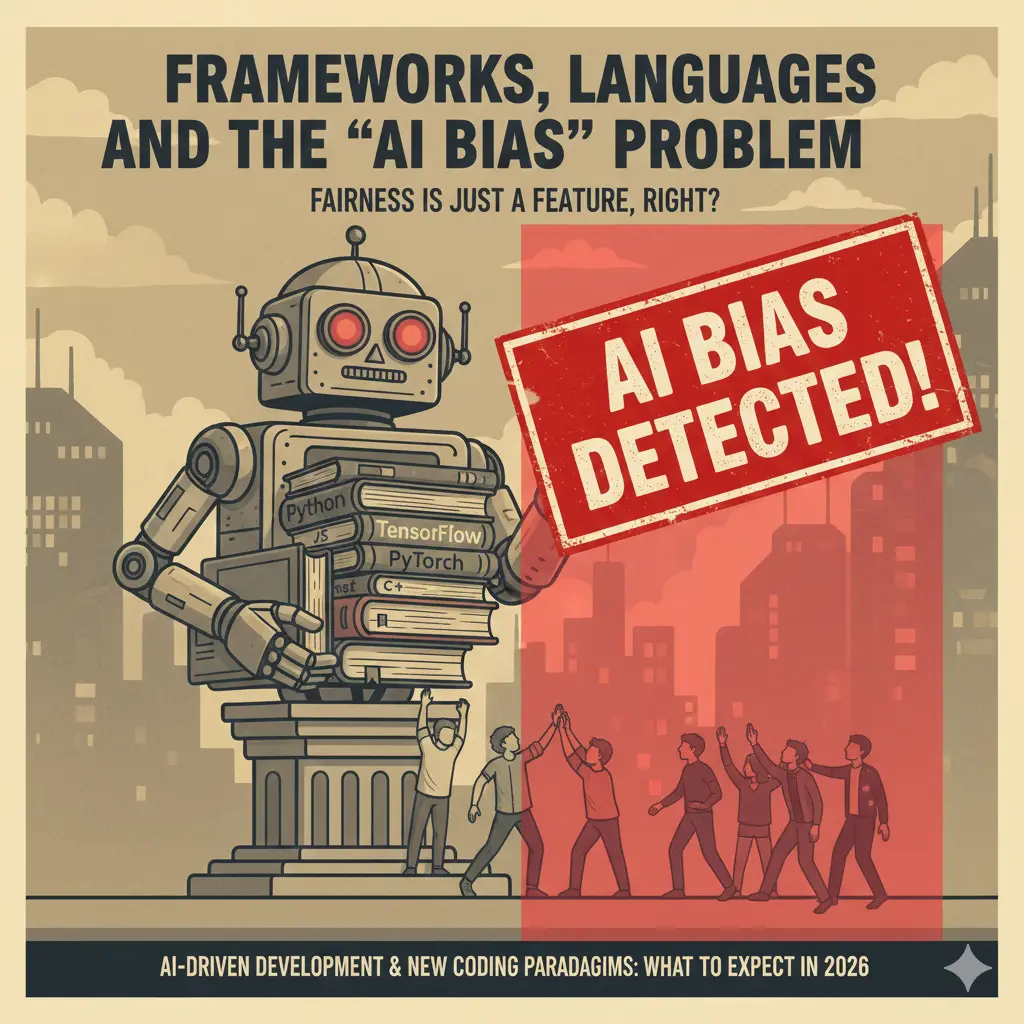
AI-generated code exhibits clear preferences for certain technologies, creating a feedback loop with significant implications.
Why AI Favors Certain Stacks
AI models are trained on public code repositories, documentation, and technical discussions. Technologies with larger representation in training data—React, JavaScript, Python, Django, Express—receive better AI support. The models have seen more examples, understand more patterns, and generate higher-quality code for these ecosystems.
Less common technologies—newer frameworks, niche languages, proprietary systems—receive worse AI support. The models lack examples and make more mistakes.
This creates a self-reinforcing cycle: developers choose AI-friendly stacks to maximize productivity, which makes those stacks even more popular, ensuring continued strong AI support. Alternative technologies fall further behind unless they actively address AI compatibility.
Risks of Monoculture
When AI channels development toward a narrow set of technologies, we lose ecosystem diversity. Different languages and frameworks embody different philosophies and trade-offs. Ruby emphasizes developer happiness, Rust emphasizes safety, Erlang emphasizes fault tolerance, Haskell emphasizes correctness.
If AI-driven development pushes everyone toward JavaScript and Python simply because AI tools work better with them, we lose the benefits of specialized tools. Sometimes the best solution really does require a different approach—not the one that’s easiest with AI assistance.
Organizations need to consciously resist this pressure when specific technical requirements genuinely demand alternative technologies.
Rise of AI-Optimized Frameworks
Some frameworks will emerge specifically designed for AI-driven development. These might use more verbose syntax to reduce ambiguity, include extensive inline documentation, or structure code to match how AI models naturally think about programs.
We’re already seeing DSLs (domain-specific languages) optimized for AI generation—configuration formats and templating systems designed to be easily interpreted and modified by AI. By 2026, expect frameworks that explicitly advertise “AI-native” design as a feature.
What Languages May Gain or Lose Relevance
Gaining ground: Python will dominate even more completely for AI and data work. TypeScript will continue supplanting JavaScript as AI tools better leverage type information for correctness. Go will gain in infrastructure projects where AI can effectively generate concurrent code.
Holding steady: Java and C# remain entrenched in enterprise environments. Rust continues growing in systems programming where safety matters more than AI productivity gains.
Losing ground: PHP continues declining as AI makes modern alternatives more accessible. Older languages without strong type systems become less attractive as AI struggles to generate correct code without type hints. Highly idiomatic languages where “doing it right” requires deep expertise may see reduced adoption.
The key insight: languages that help AI understand your intent will thrive; languages where correctness depends on subtle human judgment will face challenges.
The Rise of Autonomous and Semi-Autonomous Coding Agents
The most dramatic shift in 2026 will be the maturation of coding agents that work independently on entire features or projects.
Task-Based Agents vs. Project-Level Agents
Task-based agents handle discrete work: “Fix this bug,” “Add input validation,” “Optimize this database query.” They excel at bounded problems with clear success criteria. By 2026, most development teams will routinely assign such tasks to agents the same way they’d assign them to junior developers.
Project-level agents tackle larger objectives: “Build a user notification system with email, SMS, and push notification support, including preference management and delivery analytics.” These agents must plan work, make architectural decisions, implement across multiple components, and integrate with existing systems.
The technology enabling project-level agents—extended context windows, better reasoning, reliable tool use—will mature significantly in 2026, but won’t be fully reliable. Expect these agents to work well for greenfield projects in well-understood domains, but struggle with complex legacy codebases or novel requirements.
Agents That Plan, Write, Test, Deploy, and Monitor
The full lifecycle agent represents the logical endpoint: give it requirements, and it handles everything from initial design through production deployment and ongoing monitoring. When issues arise in production, it diagnoses problems, proposes fixes, and deploys them—within guardrails set by humans.
By 2026, such agents will exist and work well for certain classes of projects—internal tools, standard CRUD applications, API integrations. They’ll fail at products requiring genuine innovation, complex user experience design, or deep domain expertise.
The workflow becomes: humans define what to build and why, agents handle the how, humans verify the results align with intent.
Agent Collaboration and Handoff Models
Multiple agents working together will become increasingly common. A planning agent breaks down requirements, implementation agents write code for different components, a testing agent creates comprehensive test suites, a security agent reviews for vulnerabilities, and an integration agent ensures everything works together.
The challenge: coordinating agent work requires clear handoffs and shared context. When one agent’s work depends on another’s, miscommunication can cascade into failed builds and wasted compute. Designing effective agent collaboration protocols will be a key technical challenge in 2026.
Limitations: Hallucinations, Context Loss, and Overconfidence
Despite impressive capabilities, coding agents still fail in predictable ways:
Hallucinations: Agents sometimes invent functions that don’t exist, reference documentation incorrectly, or confidently assert false information about APIs. This happens less frequently than in 2023, but hasn’t been eliminated.
Context loss: Even with extended context windows, agents can lose track of important constraints when working on large projects. They might violate architectural principles established earlier or forget about edge cases discussed previously.
Overconfidence: Agents rarely express uncertainty. They’ll generate code for poorly specified requirements without asking clarifying questions, or implement complex features without acknowledging ambiguity.
By 2026, these issues will be reduced but not solved. The mitigation: strong testing, verification, and human oversight. Treat agent-generated code like you’d treat work from an intelligent but inexperienced developer who needs mentorship.
How much autonomy should we grant agents? It’s tempting to let them run freely to maximize productivity, but unchecked autonomy leads to accumulated technical debt, architectural inconsistencies, and hard-to-maintain systems. The right balance varies by project, team, and risk tolerance.
Impact on Developer Roles and Skills
The transformation of development practices will fundamentally reshape what it means to be a developer.
Shifting from Code Writing to System Design
Writing code—translating requirements into instructions a computer can execute—is becoming less central to developer work. AI handles much of the translation. What remains irreducibly human is understanding what needs to be built and why.
System design—deciding how components should interact, where to place boundaries, how to handle failure, what trade-offs to make—requires judgment informed by experience and context. These decisions shape long-term maintainability, scalability, and evolution of systems in ways that can’t be easily captured in prompts.
By 2026, senior developers will spend less time writing code and more time architecting systems, reviewing designs, and guiding AI agents toward good solutions.
Prompt Engineering and Verification
New critical skills emerge: crafting effective prompts that clearly communicate intent, and verifying that AI-generated code actually does what you intended.
Effective prompting isn’t about magic phrases—it’s about clear thinking. Can you articulate exactly what you want, including edge cases, performance requirements, and constraints? If you can’t explain it clearly to an AI, you probably couldn’t explain it clearly to a human developer either.
Verification means reading AI-generated code critically, testing thoroughly, and catching subtle bugs that might pass superficial review. This requires maintaining your technical skills even as you write less code directly.
New Roles: AI Software Architect, AI Workflow Engineer
Organizations will create specialized roles around AI-driven development:
AI Software Architects design systems specifically for AI-native development—choosing appropriate levels of abstraction, deciding what to build with AI versus manually, and ensuring AI-generated components integrate coherently.
AI Workflow Engineers optimize development processes around AI capabilities—configuring agent collaboration, setting up verification pipelines, and training teams on effective AI use.
These roles sit at the intersection of software engineering, process optimization, and AI capabilities—requiring both technical depth and organizational savvy.
Skills Developers Must Build for 2026
Critical thinking and skepticism: Don’t accept AI-generated solutions uncritically. Understand why a solution works and what could go wrong.
System decomposition: Breaking complex problems into pieces AI can handle effectively becomes a core skill. This means understanding granularity—what’s too big for an agent, what’s wastefully small.
AI evaluation and debugging: When AI-generated code fails, can you diagnose whether the problem is the prompt, the AI’s understanding, or a genuine bug in the generated code?
Domain expertise: Deep understanding of business requirements, user needs, and technical constraints becomes more valuable as implementation mechanics are automated.
Communication: Explaining technical concepts to non-technical stakeholders, collaborating across teams, and articulating requirements clearly all become more important.
What Skills Become Less Valuable
Pure coding speed matters less when AI can generate thousands of lines per minute. Memorizing syntax or API signatures has little value when AI provides instant reference. Even debugging skills that rely on pattern recognition may become less critical as AI can analyze stack traces and identify likely causes.
This doesn’t mean these skills are worthless—they remain useful—but they’re no longer differentiators for career advancement. The developers who thrive in 2026 will be those who move up the abstraction ladder.
Testing, Security, and Reliability in AI-Generated Code
AI-generated code introduces new categories of problems that traditional quality assurance processes weren’t designed to catch.
AI-Generated Bugs and Subtle Logic Errors
AI excels at generating syntactically correct code that passes basic tests but contains subtle logic errors. A function might handle the main use case perfectly while failing edge cases because the AI didn’t fully understand domain constraints.
Example: An AI generates code to calculate shipping costs. It correctly handles domestic shipping but fails to account for customs regulations on international orders above certain values. The code works perfectly in testing (using test data below thresholds) but fails in production.
These bugs are insidious because they’re not crashes or obvious errors—they’re incorrect behavior that might not be noticed immediately.
Security Risks from Training Data Patterns
AI models learn patterns from training data, including bad patterns. If a model has seen many examples of poorly secured authentication systems, it might generate authentication code with similar vulnerabilities.
Common issues in AI-generated code include:
- Insufficient input validation
- SQL injection vulnerabilities in database queries
- Weak cryptographic implementations
- Exposed secrets or API keys in configuration
- Inadequate error handling that leaks sensitive information
These aren’t theoretical concerns—security researchers have documented all of these in AI-generated code. By 2026, attackers will specifically target AI-generated code patterns, exploiting common mistakes.
Need for Deterministic Testing and Formal Verification
Traditional testing remains essential, but AI-generated code demands additional verification. Property-based testing—defining invariants that should always hold—becomes more important because it catches classes of errors rather than specific cases.
For critical systems, formal verification techniques will see renewed interest. If AI generates code from specifications, can we prove the code actually satisfies those specifications? Tools that verify correctness mathematically will gain traction in high-stakes domains like financial systems, medical devices, and infrastructure control.
AI-Assisted QA vs. Human Responsibility
AI can help quality assurance—generating comprehensive test cases, performing security reviews, and analyzing code for potential issues. But ultimate responsibility remains human.
When AI-generated code causes a security breach or data loss, who’s accountable? The developer who accepted the code? The team lead who approved deployment? The organization that chose to use AI tools? By 2026, these questions will be tested in courts and regulatory proceedings.
The pragmatic answer: treat AI as a tool, not an excuse. Developers and organizations remain fully responsible for code they deploy, regardless of how it was generated.
Regulatory and Compliance Concerns
Industries with strict regulatory requirements—healthcare, finance, aviation—will grapple with how to incorporate AI-generated code while maintaining compliance. Regulations often require documented review processes, audit trails, and accountability.
By 2026, expect regulatory guidance specifically addressing AI in software development. Some sectors may require human review of all AI-generated code before production deployment. Others might mandate that certain safety-critical components be manually written.
Organizations should get ahead of this by establishing clear policies now about what can and cannot be AI-generated, and implementing robust review processes.
Ethical, Legal, and Economic Implications
The shift to AI-driven development raises profound questions beyond pure technology.
Code Ownership and Licensing Issues
Who owns AI-generated code? The developer who wrote the prompt? The organization employing the developer? The AI company whose model generated it? What if the AI was trained on copyrighted code—does generated code inherit those licenses?
These questions remain unresolved legally. By 2026, we’ll have some case law and clearer policies from major AI providers, but expect ongoing litigation and uncertainty. Some organizations may avoid AI tools entirely until ownership is definitively settled.
The practical impact: include explicit clauses in employment contracts and vendor agreements about ownership of AI-generated work.
Accountability When AI Writes Production Code
When AI-generated code causes harm—financial loss, data breaches, system failures—who bears liability? The legal system struggles with this because traditional negligence concepts assume human actors making decisions.
If a developer uses AI to generate code, reviews it cursorily, and deploys it without adequate testing, they’re clearly negligent. But what if they performed reasonable review using industry-standard practices, and the AI introduced a subtle bug that was genuinely difficult to catch? Is the AI provider liable? The model trainer?
By 2026, insurance markets will have adapted—expect “AI-generated code liability” policies. Professional standards will emerge around acceptable practices for AI use in development.
Impact on Junior Developers and Hiring Pipelines
If AI handles tasks traditionally assigned to junior developers—implementing straightforward features, writing tests, fixing simple bugs—how do newcomers gain experience?
The concern is real: junior developers learn by doing relatively simple work under supervision, gradually building skills and judgment. If AI does that work, where does the next generation of senior developers come from?
By 2026, successful organizations will consciously create learning opportunities for junior developers—paired programming with AI, reviewing and improving AI-generated code, and working on projects specifically chosen for educational value rather than pure efficiency.
The alternative—assuming AI makes junior developers unnecessary—leads to a skills gap crisis within a few years.
Long-Term Effects on Open-Source Ecosystems
Open-source development depends on volunteer contributors, many of whom participate to learn, build reputation, and contribute to tools they use. If AI dramatically reduces the need for human contributors, what happens to open-source?
Optimistically: AI lowers barriers to contribution. Non-programmers can contribute through natural language, documentation improves, and maintainers handle issues faster. The community grows.
Pessimistically: AI-generated contributions flood projects with low-quality work. Maintainers spend time reviewing AI submissions rather than building relationships with human contributors. The community fractures.
By 2026, successful open-source projects will have clear policies about AI contributions—some embracing them, others limiting them, most finding middle ground that preserves community while leveraging AI benefits.
What to Expect in 2026: Concrete Predictions
Based on current trajectories, here’s what daily development will likely look like in 2026:
Daily Developer Workflows
A typical senior developer’s day:
- Morning: Review overnight work from autonomous agents. Three agents completed assigned tasks; one got stuck on a complex refactoring and needs human guidance.
- Mid-morning: Design session with team lead. Whiteboarding system architecture for a new feature. AI suggests alternatives based on existing patterns but humans make final decisions.
- Lunch: AI flags a security vulnerability in code merged yesterday. Review the issue, approve the proposed fix, deploy it.
- Afternoon: Implement a complex business logic change. Write specifications clearly, have AI generate initial implementation, spend time on edge cases and integration with existing systems.
- Late afternoon: Code review session. Review human and AI contributions. Most feedback focuses on architectural consistency and business logic correctness, not syntax or style.
Adoption Timeline for AI-First Tooling
By end of 2026:
- 80% of professional developers use AI coding assistants regularly
- 40% of development teams use autonomous agents for routine tasks
- 15% of codebases are primarily AI-generated, with human oversight
- Most new startups default to AI-native development workflows
- Enterprises are mid-migration, with pockets of AI-first teams and traditional teams coexisting
Changes in Software Delivery Speed
AI accelerates specific phases dramatically while others remain constrained:
Much faster: Initial implementation, boilerplate generation, routine migrations, test writing, documentation updates. Expect 3-5x speed improvements here.
Moderately faster: Feature development end-to-end, including design, review, and deployment. Expect 1.5-2x improvement.
Unchanged: Requirements gathering, stakeholder communication, complex debugging, architectural decisions, user experience design. These remain human-speed bottlenecks.
The overall effect: organizations ship features 2x faster than in 2023, but the distribution is uneven. Teams that effectively remove human bottlenecks gain more than those that don’t.
Areas Where Humans Remain Irreplaceable
In 2026, humans still dominate:
Creative problem-solving: Novel solutions to unprecedented problems require intuition and lateral thinking AI lacks.
Ethical judgment: Deciding what to build, how to balance competing interests, and what trade-offs are acceptable requires human values.
Strategic thinking: Understanding business context, market dynamics, and long-term implications of technical decisions.
Ambiguity resolution: When requirements are unclear or contradictory, humans negotiate and clarify with stakeholders.
Emotional intelligence: Building teams, mentoring, managing conflicts, and maintaining culture all remain deeply human.
Domain expertise: Deep understanding of specialized fields—medical systems, financial regulations, scientific computing—isn’t easily replicated by general-purpose AI.
What Won’t Be Solved by AI by 2026
Despite progress, these challenges remain:
Legacy code modernization: AI struggles with massive, undocumented legacy systems written in obsolete languages. Migration projects still require extensive human judgment.
Cross-cutting architectural changes: Refactoring that touches hundreds of components and requires maintaining consistency while the system continues operating remains difficult to automate safely.
Performance optimization: AI can suggest optimizations, but understanding why a system is slow and how to make it fast requires deep expertise and often custom solutions.
Novel algorithm development: Creating genuinely new algorithms or data structures for unprecedented problems remains human territory.
Integration of disparate systems: When dealing with poorly documented APIs, legacy protocols, and systems that don’t work as documented, human adaptability and creative problem-solving are essential.
How Developers and Teams Should Prepare Now
Organizations that wait until 2026 to adapt will be at significant disadvantage. Here’s how to prepare:
Tooling Strategies
Start experimenting immediately: Use AI coding assistants now, even if imperfectly. Build institutional knowledge about what works and what doesn’t.
Build infrastructure for AI integration: Set up processes for reviewing AI-generated code, monitoring quality, and measuring impact on velocity.
Establish clear policies: Decide what can be AI-generated, what requires human implementation, and what verification is needed. Document these decisions.
Invest in testing infrastructure: AI-generated code requires comprehensive automated testing. If your test coverage is inadequate, fix that first.
Skill-Building Roadmap
For individual developers:
Now to mid-2025: Master current AI coding tools. Learn prompt engineering. Practice critical evaluation of AI outputs.
Mid-2025 to end-2025: Develop system design and architecture skills. Study software patterns, distributed systems, and scalability. Focus on the “why” not just the “how.”
2026: Build expertise in AI debugging and verification. Learn to work with autonomous agents effectively. Develop specialization in areas where human judgment is crucial—security, performance, user experience.
How to Experiment Safely with AI Agents
Start with low-risk projects: Internal tools, prototypes, and non-critical features are good experimental grounds.
Implement strong guardrails: Require human review before deployment. Use staging environments. Have rollback plans.
Measure carefully: Track bugs, security issues, and technical debt introduced by AI-generated code compared to human-written code.
Learn from failures: When AI-generated code causes problems, understand why. Was it a prompt issue? A limitation of the model? A gap in verification?
Share knowledge: Create internal wikis documenting what prompts work well, what types of tasks AI handles reliably, and where human expertise is essential.
Organizational Changes Teams Should Start Making in 2025
Redefine roles and responsibilities: Clarify what “senior developer” means in an AI-assisted world. Create career paths that value architecture and oversight, not just code volume.
Redesign code review processes: Reviews should focus on correctness, architecture, and maintainability—not syntax and style that AI handles.
Invest in junior developer education: Create deliberate programs ensuring newcomers build foundational skills despite AI handling routine tasks.
Adapt hiring practices: Interview for system thinking, problem decomposition, and critical evaluation rather than memorized algorithms.
Build AI literacy across the organization: Product managers, designers, and executives need to understand AI capabilities and limitations to set realistic expectations.
Establish ethics committees: Create forums for discussing responsible AI use, addressing concerns, and setting organization-wide standards.
Conclusion
The transformation of software development through AI is neither utopian nor dystopian—it’s pragmatically complex. By 2026, AI will be deeply embedded in development workflows, enabling dramatic productivity gains while creating new challenges around quality, accountability, and developer growth.
The core shifts we’ll see:
Paradigm evolution: From writing code to specifying intent, from implementation to verification, from individual work to human-AI collaboration.
Role transformation: Developers become system architects and AI orchestrators, requiring deeper conceptual understanding even as implementation mechanics are automated.
Productivity paradox: Dramatic speed increases in some areas coexist with unchanged bottlenecks elsewhere, requiring careful workflow redesign to capture benefits.
Quality challenges: AI-generated code introduces subtle bugs and security vulnerabilities requiring new verification approaches and more sophisticated testing.
Skills disruption: Traditional coding skills remain valuable but insufficient. Critical thinking, system design, and domain expertise become differentiators.
Organizational adaptation: Companies must consciously preserve learning opportunities for junior developers while leveraging AI capabilities, avoiding short-term efficiency gains that create long-term skills gaps.
The opportunity is immense: faster development cycles, lower barriers to entry, and the ability to build more ambitious systems with smaller teams. The responsibility is equally significant: ensuring AI-generated code is reliable, secure, and maintainable; preserving the craft of software development while embracing new tools; and considering the societal implications of increasingly automated software creation.
The developers and organizations that thrive in 2026 won’t be those who adopt AI most aggressively or resist it most stubbornly. They’ll be those who thoughtfully integrate AI capabilities while maintaining human judgment, creativity, and accountability at the center of software development.
The relationship between humans and AI in software development is still being defined. We’re not becoming obsolete, nor are we simply gaining better tools. We’re evolving into something new: developers who think at higher levels of abstraction, who orchestrate sophisticated systems of humans and machines, who focus on the problems worth solving rather than the mechanics of solution implementation.
That evolution requires intention. It requires consciously developing new skills while preserving valuable old ones. It requires organizations that balance productivity with people development. And it requires maintaining perspective about what we’re building and why—questions that remain irreducibly, essentially human.
2026 won’t be the end of this transformation; it will be the moment when AI-driven development moves from experimental to standard practice, from a competitive advantage to a baseline expectation. The decisions we make between now and then—about how to use these tools, what skills to develop, what processes to establish, and what values to preserve—will shape software development for decades to come.